Understanding the Municipal Election Results
Understanding the Municipal Election Results
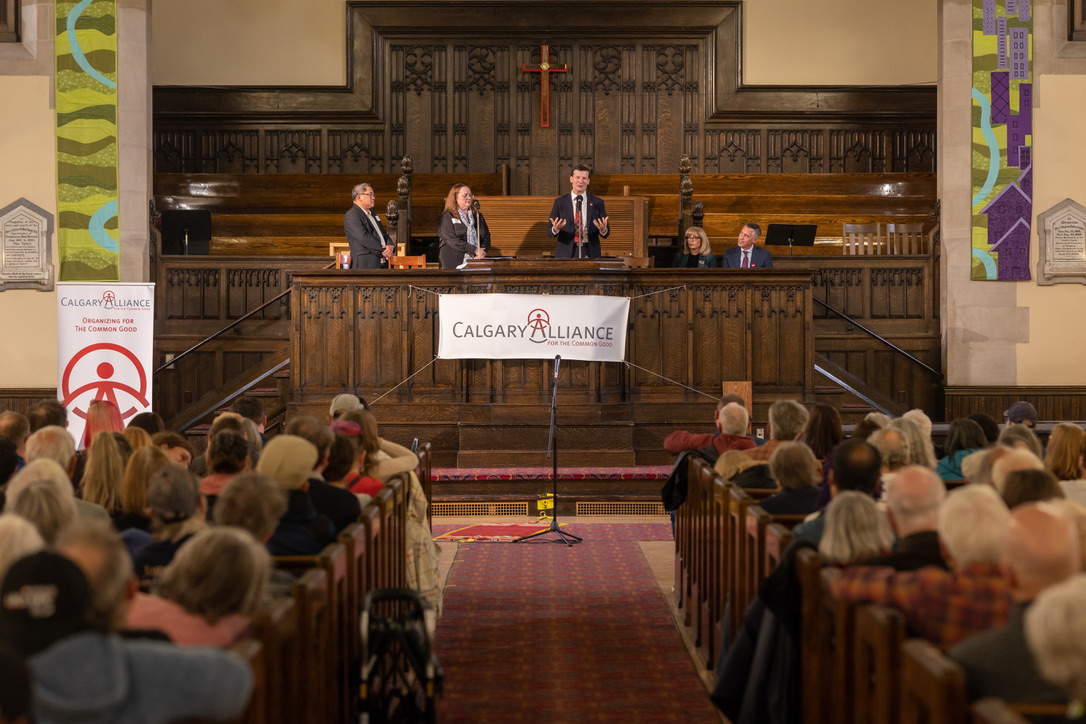
I find it interesting that the difference between Jeromy Farkas’s winning votes and Sonya Sharp’s was about the same number as the number of people who attended our Mayoral Forum that Farkas attended and Sharp did not. It is a good reminder of why our shared work matters.
Our municipal election has seen unprecedented change to our city council. There are 10 new council members and a new Mayor. We have to go back to 1915, during World War I, when there were nine new council members to find a similar turnover. So what does this mean for us and our work for the Common Good?
When we look at who won, six of the candidates who engaged with our ward team and the Mayoral process won. An additional four winning council candidates responded to our surveys, and one, Raj Daliwal, has worked with us in the past on issues. This means we have seven council members who have demonstrated their willingness to engage with us by their actions, and when we include our survey results, ten council members have indicated they will work with us on the issues we identified—though not all supported the solutions we were bringing forward. With. It is also important to note that both Wards 1 and 12, along with the Mayoral vote, were extremely close, which means these council members will need to work with communities to keep their seats.
What is also significant is that our new Mayor, to be Jeromy Fakas, was not only present at our Mayoral forum but also made very strong commitments to work with us to move the issues you identified forward.
Overall, what we see are several important shifts. There has been a shift toward a more conservative council, and among conservative candidates, the party system seems to have helped candidates be elected, but they were from two different parties. On the more progressive side, it was independents who won, and the one Calgary Party candidate who had run before, DJ Kelly. In our current political environment, this makes it look like parties are here to stay, but they are unlikely to act as a unified voting block
This means we have people we can work with, but it also means this work will be more challenging and involve much more careful political work (Politics meaning how we address collective issues amongst a diverse community). We will need to build relationships and earn support from people who may hold different opinions and positions from ours.
The city council has shifted, and with it, how we work will also need to shift. It will not be as easy as it has been to win on issues, but with good relational and political work, we can continue to move forward our agenda for the common good.